Why Christianity?
There are many religions in the world, past, present, and future. But Christianity, specifically Catholicism, is just one. So why this religion? Why not no religion at all? The answer to that was once right under a monk's nose.
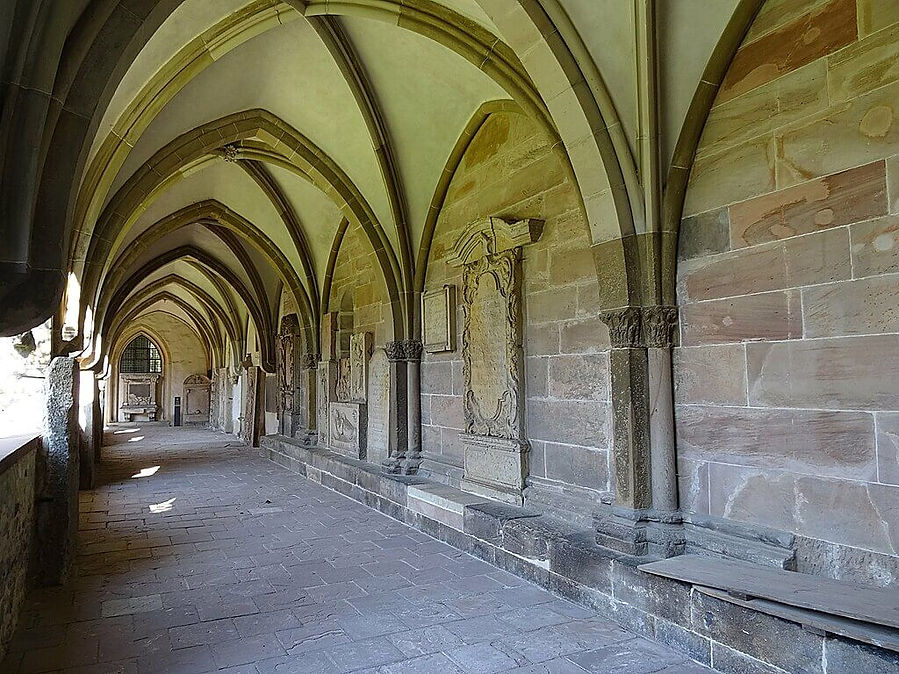
Magdeburg Cathedral in Eastern Germany

Figure 1: The Relics of the Eucharistic Miralce of Lanciano
The Eucharistic Miracle of Lanciano
-
Around the year 750 AD, in Lanciano, Italy, a Basilian Monk with weak faith in God said the Words of Consecration over a bread and wine.
-
Usually, the substance would change to the Body and Blood of Christ, but the physical properties would remain unchanged, in a process called transubstantiation.[1]
-
This time, though, they actually received the physical properties of flesh and blood, and visibly changed!
-
Initially dumbfounded, the Monk happily proclaimed the miracle to his congregation. The news spread across the town, and countless people rushed over to the site to see the miracle for themselves.
-
Multiple Bishops met, recorded the miracle, and put the relic into their own possession and protection.
-
Since then, it was regular for people to make a pilgrimage to the church holding the relics, to see this miracle for themselves.
The Scientific Investigation
-
In 1970-1971, over 1000 years after it had occurred, the samples were examined by Professor Odoardo Linoli, a scientist and Head of the Laboratory of Clinical Chemistry.
-
His findings were as follows:
-
The flesh was mesodermal tissue, specifically endocardium, myocardium, and heart tissue with arterial, venous, and nervous structures.
-
The Presence of blood was confirmed, and, with the flesh, were from the human species, with normal protein compositions.
-
In addition, the flesh cells had normal cell morphology, but had no nuclei, which contain DNA. Other instances of Eucharistic miracles have also reported on the lack of human DNA.[2]
-
The protein composition of the blood was found to be similar to fresh blood.
-
In addition, there was no evidence that the flesh was treated with any mummifying substance, but the flesh had not decayed.
-
This study was approved by another scientist, Professor Ruggero Bertelli, of Normal Human Anatomy.
-
For a detailed explanation of the tests, experiments, results, and figures, see the third citation of this page. [3]

Nuclei
No Nuclei
Figure 2:
Tissue from Lanciano Sample (Top) and Normal Individual (Bottom)

Figure 3: The Relics of the Eucharistic Miralce of Lanciano
Affirming the Eucharist and Christianity
-
This miracle is extraordinary for the following reasons:
-
It is in reference to Mark 14:22-24 in the Bible where, during the Last Supper, Jesus (יֵשׁוּעַ) says, referring to the bread and wine, “this is my body.... This is my blood of the covenant, which is poured out for many.” [NRSV].
-
The bread and wine physically becoming body and blood affirms Christ's real presence in the Eucharist, something only Catholic, Orthodox, and Assyrian Christians believe in. [4]
-
It is also a Christian belief that Jesus (יֵשׁוּעַ) is God, who forgives sins (Mark 2:5-10) and rides the clouds of Heaven (Matthew 26:64), things only God can do by Himself, and when working through other people (John 20:23).
-
The divinity of Christ is an essential part of His mission, as a Man who is God is the only way humans can obtain salvation, and the only way creation can be restored. [5]
-
Therefore, if it is truly Jesus (יֵשׁוּעַ), the King of Kings, the Lord of Lords, and the Alpha and Omega, who is present with us every Mass, with His full Humanity, Soul, and Divinity, then Mass is the closest one can get to God in this lifetime, and we should be humbled that the King of Kings wants to be with us.
-
This miracle shows is that, during Mass, Heaven and Earth truly unite.
Why not Another god?
-
As stated earlier, Christians are the only religion to believe in the physical presence of Jesus (יֵשׁוּעַ) in the Eucharist [4], which this miracle affirms.
-
Thus, for example, it would be difficult to explain why the god that Muslims believe in would do this, because he would have no clear reason to do a miracle affirming another religion that he clearly warns people not to follow (Qur'an 98:6) [6]
-
This is especially true given that there are no provable miracles with islam's main prophet, Muhammad. [7]
-
It would make little sense for this god to give me few reasons to follow him by having his prophet not do any provable miracles, but give every reason to follow a "false" belief by doing miracles specific to only that religion. [8]
-
In addition, this miracle would not make sense for any religion other than Christianity, as the Eucharist is not in anyone else's theology.
-
Therefore, it is most reasonable to believe that the cause of this miracle is the God that Christians believe in, not any other god.
-
While this does rule out every non-Christian religion, as well as non-religion, Catholics and Orthodox Christians have similar views on the Eucharist, [9]
-
Thus, if one wants to be Catholic, specifically, he or she must find other justifications.
-
Still, though, it is better to debate between these two than the thousands of other existing religions, and Atheism.
-
To see how this miracle affected my faith, click here.


Figure 4 and 5: St. Vitus Cathedral, Czech Republic
Common Objections
God of the Gaps?: A god of the gaps argument is defined as not knowing how something happens, forming a theology to answer it, and, thus, believing in this theology. This miracle is not the case. The Gospel of Mark, where the Last Supper scene of the Bible is from, was written before 73 AD [10], and the Early Christians, such as Saint Ignatius of Antioch in 110 AD, believed in the real, physical presence in the Eucharist [11]. Thus, the theology of the Eucharist was largely formed before the miracle event, not after. And the story of the miracle also occurs before the experiments done (see Historical Dating), thus, there is no clear evidence theologies are being formed to explain the unknown in this situation. While we do have God as the answer to our questions, that is not always a god of the gaps fallacy, as, if there were a God who gave us evidence for Him, and we used this evidence to point to Him, we'd be right. One cannot assume that there is no God before looking into evidence, as, then, even if there is a God, this person will never know.
In terms of the miracle itself, we know enough about bread and wine to know that they do not spontaneously turn into body and blood that never rots. We also know from mummies that proteins show large-scale degradation over large amounts of time [12] [13], and have no evidence of protein blood lasting more than a few days at room temperature before degrading [14]. The samples from Lanciano, though, were superimposable to fresh proteins [3, Page 36], yet no preservatives were detected [3, Page 32]. Few, if any, known secular examples of this phenomenon exist, and we know of no natural explanation that fits all of these attributes. Since it lines up with Catholic Eucharistic Theology well, though, the God of Christianity is the most likely explanation for this event with the data we have. For more information on this philosophy, see Robert Larmer's work in the 15th citation for this page. [15]
Historical Dating: Some claim that the historicity of this miracle is unclear until the 1500s, where known records of it first appear. This could be explained by the fact that there were earlier records, but they were stolen in the 1500's [3, page 9], and had to be replaced. Thus, I argue that it is still likely from the 8th century, but even if the most skeptical claims are true and this happened in the 1500s, there is still preserved tissue and blood that needs explanation. Thus, the validity of the miracle stands, though the history may potentially need updating.
How do we know this is an old sample, and not fake?: Reduced levels of Phosphorus, Sodium, and Potassium are consistent with an old sample [3, Page 37, 38], indicating that this is not newly-made. Histological analysis also shows that there is normal cell morphology [3, page 25-32] As the latest possible date for this specimen to appear is the 1500s, and Robert Hooke, the man who discovered cells, was born in 1635 [16], these specimens are very unlikely to have been manufactured by people. Thus, I conclude that this is an old sample, and likely not faked. While the proteins were superimposable to fresh blood [3, Page 36, Control sample [17], it could be that God wanted to make a sample appear both new and old, to distinguish it from normal old tissue, but also disprove claims of fresh material being used for the test instead of the Lancaino samples. It is also important to note that no preservatives were detected in the samples [3, Page 32], and that the Electrophoretic Analysis done on the proteins would normally detect large-scale degradation had there been any. [18] In addition, the Catholic Church has debunked alleged Eucharistic Miracle claims in the past, including one in Tyrol, Austria [2], so, when it does say yes to one, like in Lanciano, the yes is more valid.
Could it be a Mummy?: This objection is often raised to explain the lack of nuclei from the H&E staining in this experiment, as mummifying substances leads to inconsistent stain results. [19] The sample was searched for mummifying chemicals, such as the ones used in Egyptian Mummies, and none were found [3, Page 32]. In addition, old, naturally mummified samples, such as ones found in northern German bogs 1600-2300 years ago, or Korean ones from 500 years ago, show decayed outer cell layers and excessive collagen [20]. The Lanciano sample, however, showed none of these signs [See Fig. 10 of the Third citation on this page]. Drying is the only thing to have happened to this sample [3, Page 24]. In addition, previously dry samples do show nuclei when treated with H&E stain [21], so, if the Lanciano sample had nuclei, the staining would have revealed it. More on the lack of DNA can be found below. Thus, the evidence strongly suggests that no known natural or chemical mummification process can sufficiently explain the Lanciano samples.
Did the WHO confirm this?: Many claim that over 500 tests were done on this sample by the World Health Organization (WHO), but this was discovered to be mislabeled papers about Egyptian Mummies. [2] It is unknown how this hoax was started, but, as many Catholics say, it is, "terrible deception". [22] Either way, the report from Dr. Linoli and the English summary [3] is sufficient evidence, thus, this miracle stands.
The AB Blood Type might be fake: Many individuals bring this objection up about the claimed AB blood type [2]. While this seems to be the strongest objection, even if it does have validity, though, there still body and blood that need explanation, regardless of the blood type. Thus, while this objection may, at worst, disprove a minor detail, it does not disprove the overall claim of this miracle.
How do we know it was originally bread?: To say that it was not originally bread and wine would need an alternative explanation; a naturalistic, non-miraculous method for how this event could happen. But, as discussed in the second paragraph of the God of the Gaps? section, there are none we know of. Even though the specimen was dry, even freeze dried food only lasts 2-6 months when opened [23], and this sample is at least hundreds of years old, and not sealed as well. This makes a purely natural cause for this highly unlikely, and less likely than the miraculous alternative. Thus, the simplest explanation with the data we have is the story and theology that existed before the tests were done: that the Monk, on that day, asked if Jesus (יֵשׁוּעַ) was there, and He said, "yes," and preserved His,"yes," for future generations to see.
Why did the Samples Lack Nuclei/DNA?: Jesus (יֵשׁוּעַ) was fully God and fully Man [24], thus, He had human DNA while on Earth [25], though probably not through natural means, as Mother Mary (מרים) was a virgin at the time of His birth (CCC §498).
In the Miracle samples, to avoid people sequencing Jesus (יֵשׁוּעַ)'s genes, cloning Him, etc. the DNA could have been present, but veiled in the same way as in normal Eucharists in transubstantiation [1], so people could not detect it. Despite no DNA found, it is still known that the sample is human, because of the results of the Zonal Precipitation test ([3], Page 34) and the Electrophoretic Analysis [3, Page 36]. Thus, the DNA was likely veiled to make cloning Jesus (יֵשׁוּעַ) impossible, but does not affect an overall result of this experiment.
Which tests Confirmed what?:
- Normal morphology/tissue type: Histological Studies, H&E staining.
- Blood present: Thin Layer Chromatography
- Human Species: Zonal Precipitation
- Normal Protein Composition/Structure: Electrophoretic Analysis
- No Preservatives: Histological Studies [3]
How can I learn more about this?: Visit Google, and search: "The Eucharistic Miracle of Lanciano Historical, Theological, Scientific and Photographic Documentation"". This article was written by Fr. Nicola Nasuti, and details all of the experiments, tests, and photographic evidence for the claims made in this page. Much of the information here used this source. You can also click here.
Bibliography for This page
[1] Journet, Charles Cardinal. “Transubstantiation.” The Thomist: A Speculative Quarterly Review, vol. 38, no. 4, Oct. 1974, https://doi.org/https://doi.org/10.1353/tho.1974.0062.
[2] Kelly, Kearse, and Ligaj Frank. “Scientific analysis of eucharistic miracles: Importance of a standardization in evaluation.” Journal of Forensic Science and Research, vol. 8, no. 1, 13 Nov. 2024, pp. 078–088, https://doi.org/10.29328/journal.jfsr.1001068.
[3] Nasuti, Fr. Nicola. The Eucharistic Miracle of Lanciano Historical, Theological, Scientific and Photographic Documentation, 5 June 1995.
[4] Kelly, Matthew. “What Makes Catholicism so Unique?” 33 Days to Eucharistic Glory, Blue Sparrow, 2023, pp. 9–10.
[5] St. Athanasius. Athanasius: On the Incarnation: De Incarnatione Verbi Dei. Translated by Robert Kingswell, Eterna Verba Publishing, 2026.
[6] Dawood, N.J. The Koran. Penguin Classics, 1990.
[7] Lataster, Raphael. “Doubting the quran, the hadith, and Muhammad’s splitting of the Moon: A probabilistic refutation of one of Islam’s most striking miraculous claims.” Perichoresis, vol. 19, no. 3, 1 July 2021, pp. 39–47, https://doi.org/10.2478/perc-2021-0016.
[8] D’Aoste, Anselme. Proslogion: Discourse on the Existence of God. Beloved Publishing LLC, 2014.
[9] Nicolaides, Angelo. “Investigating the holy eucharist and the term ‘people of God’ according to the Eastern Orthodox Church.” Pharos Journal of Theology, 1 Jan. 2021, https://doi.org/10.46222/pharosjot.1023.
[10] Henderson, Suzanne Watts. “The Gospel According to Mark Chapter Introduction.” New Oxford Annotated Bible, 5th ed., Oxford University Press USA, Oxford, New York, 2018, pp. 1829–1830.
[11] Theophorus, Ignatius. “The Epistle of Ignatius to the Romans. Chapter 7.” Edited by Cleveland Coxe and Kevin Knight. Translated by Alexander Roberts and James Donaldson, CHURCH FATHERS: Epistle to the Romans (St. Ignatius), New Advent, 110 A.D., www.newadvent.org/fathers/0107.htm.
[12] Mikšík, Ivan, et al. “Proteins and their modifications in a medieval mummy.” Protein Science, vol. 25, no. 11, 8 Sept. 2016, pp. 2037–2044, https://doi.org/10.1002/pro.3024.
[13] Wiecek, Andrew S. “Mummy Proteins Tell a Different Tale .” The University of Texas at Austin, Biotechniques The International Journal of Life Science Methods, 9 Nov. 2012, hackert.cm.utexas.edu/courses/ch370/fall2013/StudentArticles/Mummy%20Proteins.pdf.
[14] Shabihkhani, Maryam, et al. “The procurement, storage, and quality assurance of frozen blood and tissue biospecimens in pathology, biorepository, and Biobank Settings.” Clinical Biochemistry, vol. 47, no. 4–5, 12 Jan. 2014, pp. 258–266, https://doi.org/10.1016/j.clinbiochem.2014.01.002.
[15] Larmer, Robert. “Is there anything wrong with ‘God of the gaps’ reasoning?” International Journal for Philosophy of Religion, vol. 52, no. 3, Dec. 2002, pp. 129–142.
[16] Rowbury, Robin. "Robert Hooke, 1635–1703." Science progress 95.3 (2012): 238-254.
[17] "Protein Electrophoresis, Serum. Test Code LAB119.” Medical University of South Carolina, musclabservices.testcatalog.org/show/-LAB119-?utm_s. Accessed 9 Mar. 2026.
[18] O’connell, Theodore X., et al. “Understanding and Interpreting Serum Protein Electrophoresis.” American Family Physician, 2005 ;71(1):105-112 https://www.aafp.org/pubs/afp/issues/2005/0101/p105.html
[19] Morozova, Irina, et al. “Ongoing tissue changes in an experimentally mummified human leg.” The Anatomical Record, vol. 303, no. 12, 27 Dec. 2019, pp. 3085–3095, https://doi.org/10.1002/ar.24333.
[20] Chang, Byung Soo, et al. “Preserved skin structure of a recently found fifteenth‐century mummy in Daejeon, Korea.” Journal of Anatomy, vol. 209, no. 5, 26 Sept. 2006, pp. 671–680, https://doi.org/10.1111/j.1469-7580.2006.00607.x.
[21] Lim, Jeremy J., and Thomas J. Koob. “Placental cells and tissues: The transformative rise in advanced wound care.” Worldwide Wound Healing - Innovation in Natural and Conventional Methods, 7 Dec. 2016, https://doi.org/10.5772/65321.
[22] Trasancos, Stacy. “The Fake Lanciano Who Report.” GOD & ELEMENTS, GOD & ELEMENTS, 12 Aug. 2025, stacytrasancos.substack.com/p/the-fake-lanciano-who-report.
[23] “Freeze Dried Food.” Emergency Food Storage, www.emergencyfoodstorage.co.uk/pages/freezedriedfood#:~:text=Freeze%20dried%20foods%20have%20a%20long%20shelf,cans%20and%201.5%20years%20in%20room%20temperature. Accessed 11 Mar. 2026.
[24] “Chalcedonian Creed.” Theopedia, Theopedia, theopedia.com/chalcedonian-creed. Accessed 4 Dec. 2025.
[25] Hillers, Kenneth J. “Meiosis.” WormBook, 4 May 2017, pp. 1–43, https://doi.org/10.1895/wormbook.1.178.1.
Photo Credits for This page
Magdeburg Cathedral in Eastern Germany: “Magdebourg Dom” by ErwinMeier. Licensed under CC BY-SA 3.0 https://creativecommons.org/licenses/by-sa/3.0/deed.en
Figure 1: “1 miracolo" by AFC Photo. Licensed under CC BY-SA 3.0 https://creativecommons.org/licenses/by-sa/3.0/deed.en
Figure 2: This is a combination of two pictures, top and bottom. Top: Picture of tissue from Lanciano Miralce. Figure 2 from Nasuti, Fr. Nicola. The Eucharistic Miracle of Lanciano Historical, Theological, Scientific and Photographic Documentation, 5 June 1995. Fig 2 A label was added by myself using Wix. Bottom: “414c Cardiacmuscle” by OpenStax College. Licensed under CC BY 3.0 https://creativecommons.org/licenses/by/3.0/deed.en Black arrows were added by myself using MS Powerpoint, and a label was added by myself using Wix.
Figure 3: “Miracolo Eucaristico di Lanciano - foto dal vivo” by Junior. Public Domain.
Figure 4: Top. "StVitusPragueInteriorFromDistanceatSunset" by Tamcgath. Licensed under CC BY-SA 3.0 https://creativecommons.org/licenses/by-sa/3.0/deed.en
Figure 5: Bottom. "Czech Crown Jewels" by Lamprus. Public Domain